The Fun Of The Hunt!
  • The Fun Of The Hunt!
  • About Us
  • Research & Value Guides
    • Antiques
    • Books
    • Coins & Stamps
    • Dolls & Figures
    • Games
    • Marbles
    • Music Related
    • Toys
  • TFOTH Hunter's Blog
  • Interesting Links
  • Buy Stuff
  • Contact Us

Restoring Vintage MARX Figures & Other Plastics

12/9/2015

Comments

 
Picture
Picture
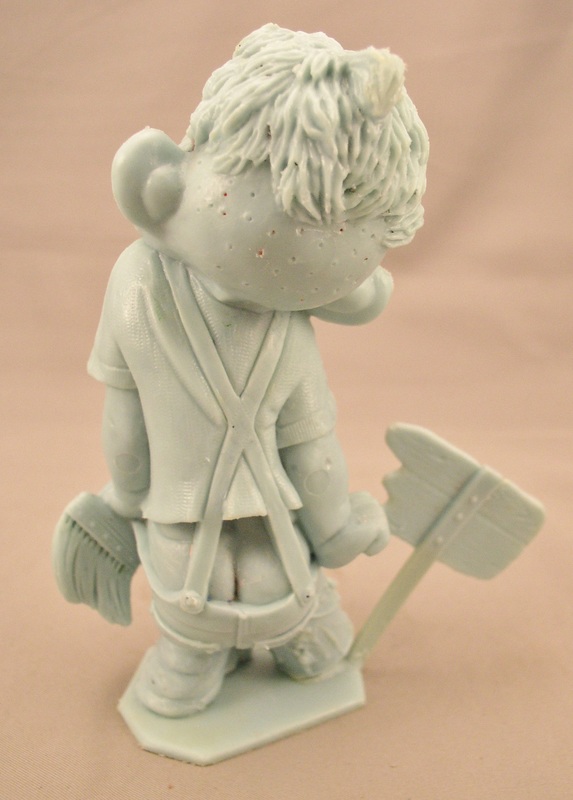
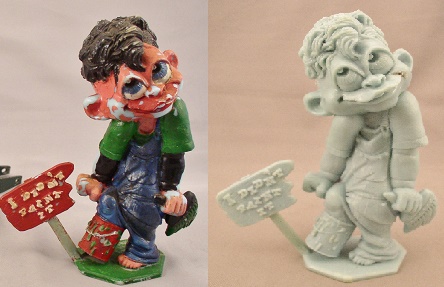
Have you ever passed on a vintage Marx Figure (as seen above), Toy Soldier, or even a vintage built - but perhaps rarer - Model Kit because it had been badly painted?  Many of these will bring good money if in decent shape and original configuration, but will bring very little if poorly painted. The good news is removing that paint might be much easier than you are aware of!

Here's a short guide on how we restored this early Marx "Blame-Its" figurine.

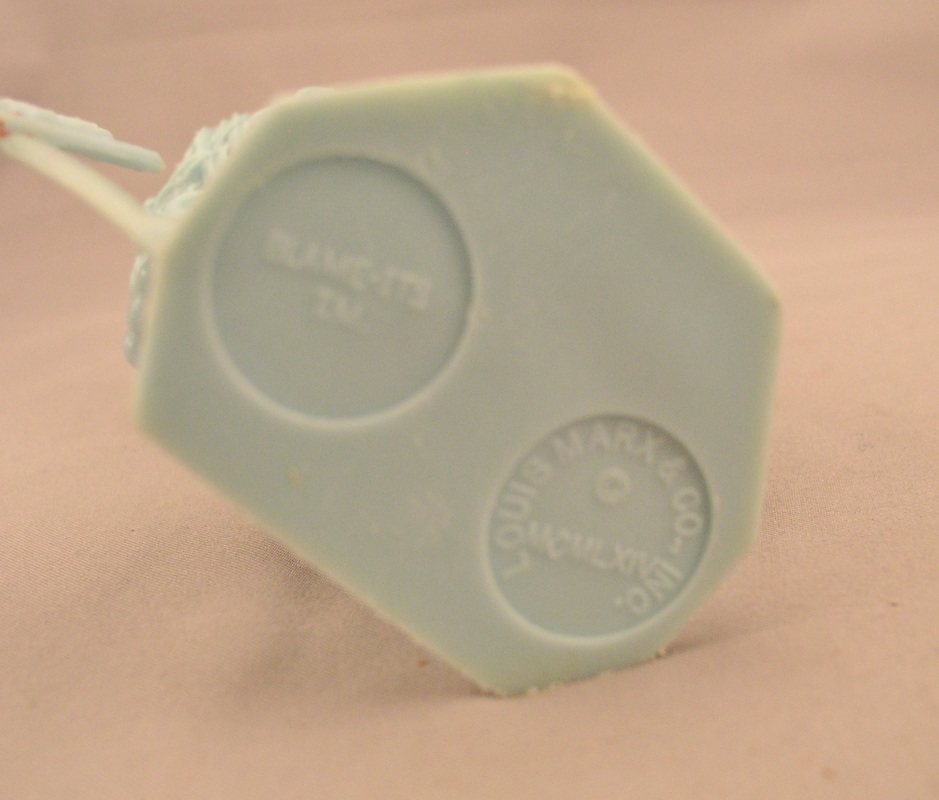
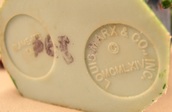
Most collectors have heard of the Marx "Nutty Mads" line of figures produced in the early to mid sixties. These were hard plastic figurines that were inspired by various Mad Magazine comic figures and also the "Rat Fink" figure made popular by Ed "Big Daddy" Roth, who licensed his designs into  model kits produced by Revell. The styles eventually evolved into another line of Model Kits by Hawk called "Weird-Ohs", which depicted many of the Marx Figures.  The concepts met with great success, and Marx expanded the line into several offshoots, including the "Weird-Ohs" series, the "Blame-Its" series and the "Cartoon Soldiers" series (better known as the "Nutty Generals").  The latter two series are quite hard to find in good condition, and while most original Nutty Mad figures go for under $20, the Blame-Its figures will usually sell in the $35 to $55 range if in original condition. If you find any of these early Marx 6" figures, be sure to check the base. The original Marx figures are embossed with the Marx Logo. Marx was sold in 1972 and many of these figures were reproduced later in Mexico, however they do not have the Marx logo. The originals are what are sought after and hold the value.

So we were pleased last weekend to find this "I Didn't Paint It" Marx Blame-Its Figure at a local flea market for a couple bucks. It was very poorly painted, but otherwise in pretty good shape with an intact sign post (these are usually broken of chewed off).
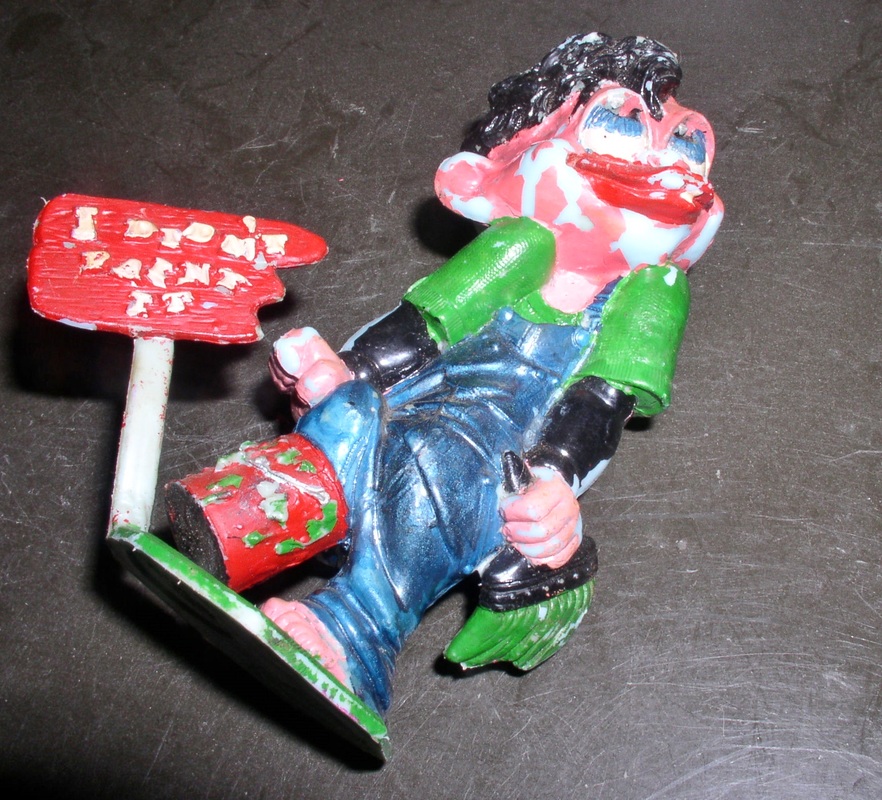
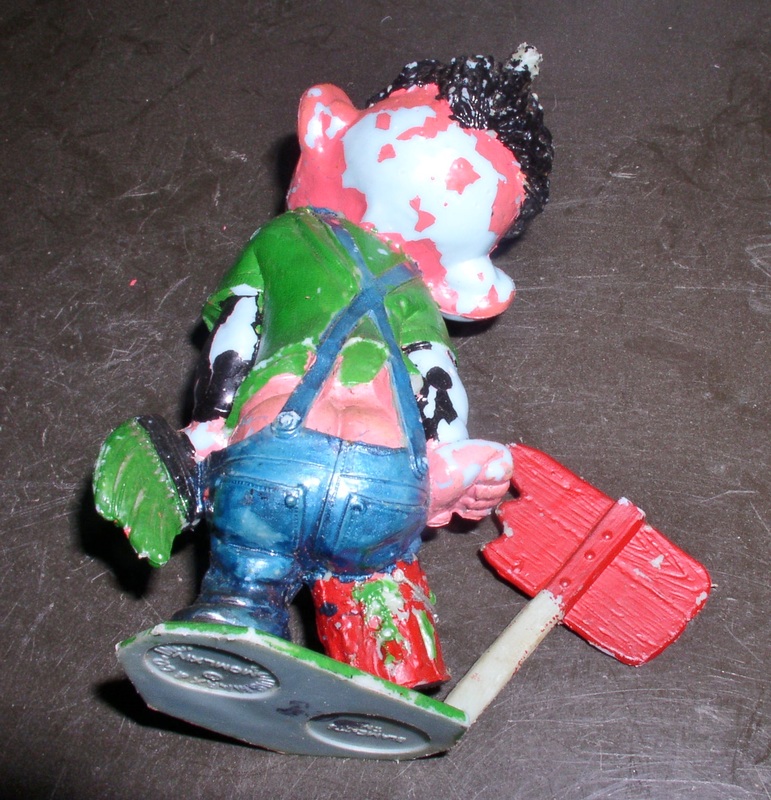
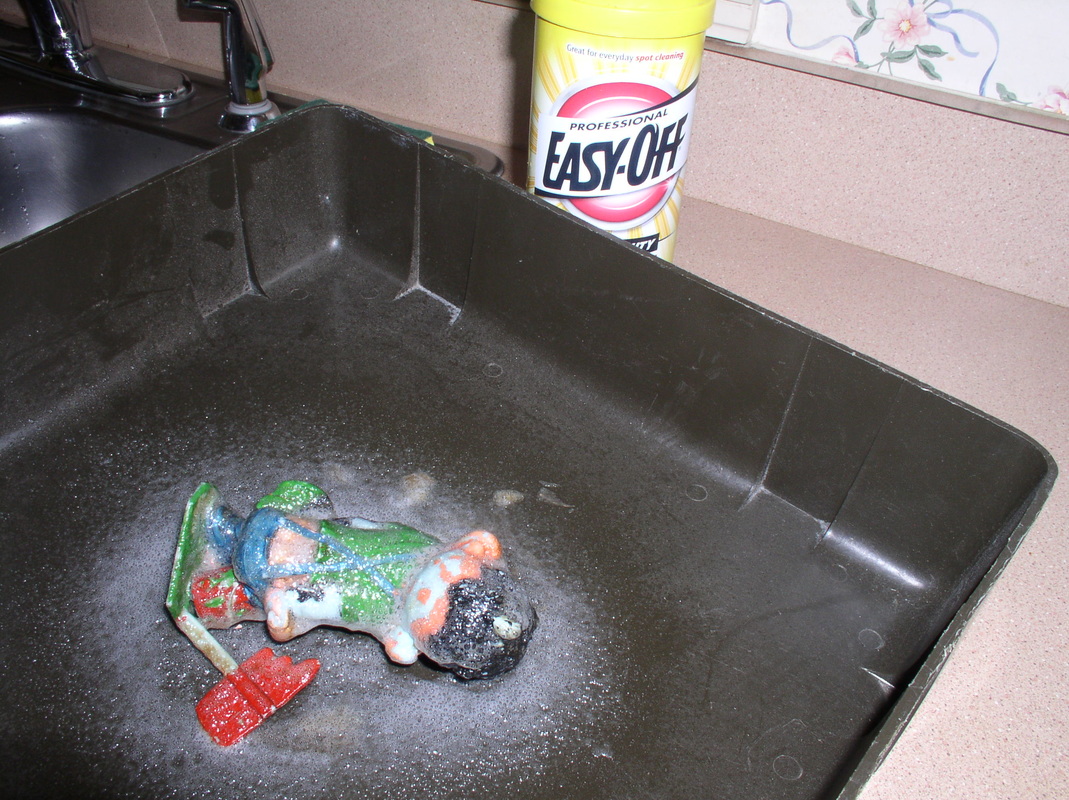
To remove the paint you will need a can of Easy Off Oven Cleaner, Heavy Rubber Gloves, Eye Protection, an old Tooth Brush, Wooden Toothpicks, and a suitable work area (either outdoors or using a plastic or fiberglass box). The oven cleaner is nasty stuff, so be sure to use heavy rubber gloves and eye protection, and use it in a properly ventilated area. We use the larger fiberglass top section of a commercial battery box as a work station so we can do it indoors. Outdoors you can use newspapers, an old piece of plywood, or just about anything you don't mind throwing away afterwards if it won't wash up.
Picture
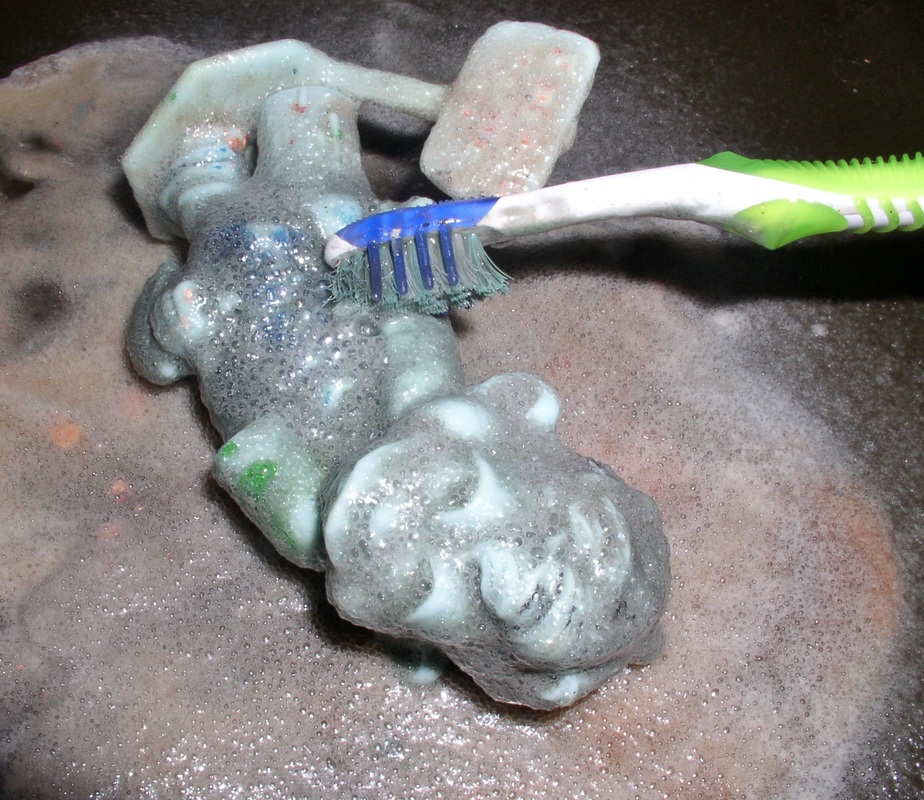
To begin with, shake up the Oven Cleaner and generously spray all sides of the figure. (Note that the cleaner doesn't seem to affect hard plastics or metals, but will react with some rubbers, so if in doubt test a section of what you will be spraying ahead of time). Let the Oven Cleaner do all the work, not you, usually taking several hours. You will want to check it and respray it occasionally if it begins to dry out. After several hours you can test it with a toothpick and if the paint starts to flake off in most areas, use the toothbrush to carefully scrub the figure (make sure you have eye protection on here as the toothbrush will splatter it somewhat). You will not normally be able to remove all the paint in this first step, so don't try and scrub it all off at once.
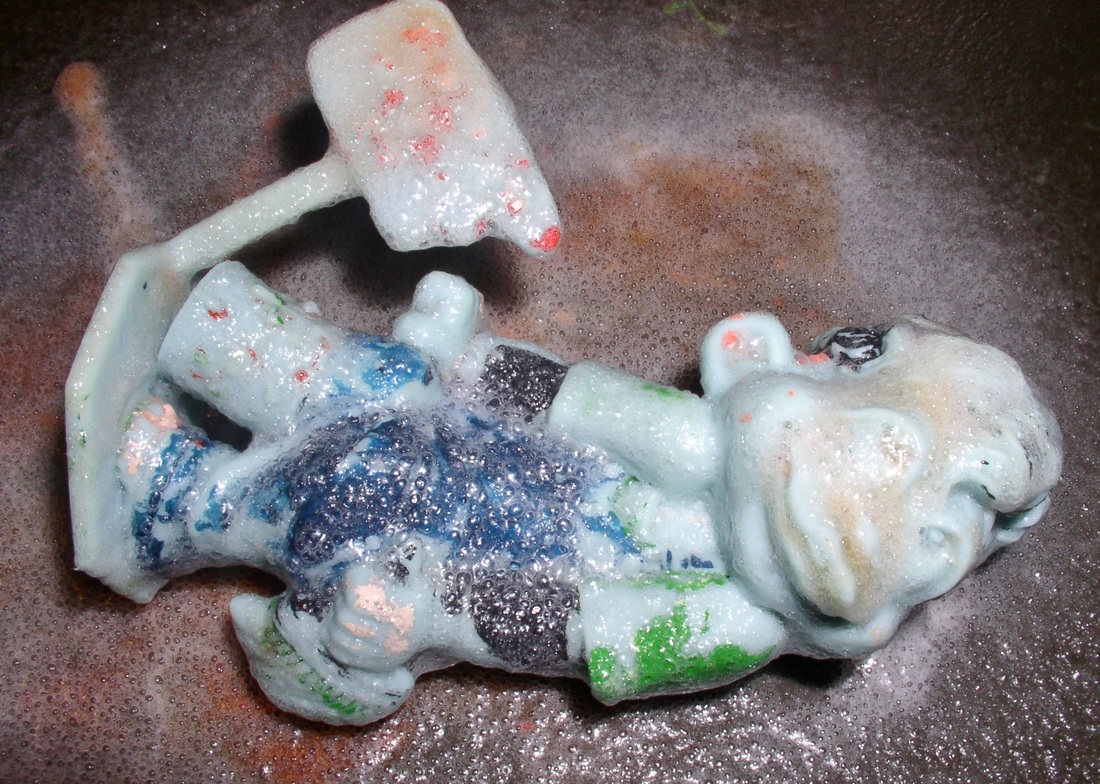
Once the paint that can be loosened is loose, gently wash the figure clean with water. Repeat the steps above, and again allow several hours for the Oven Cleaner to work. At the end of this stage you can use the wooden toothpicks to dislodge softened paint from cracks and crevices that the brush misses. If paint remains, repeat for a third time but this is normally not required.
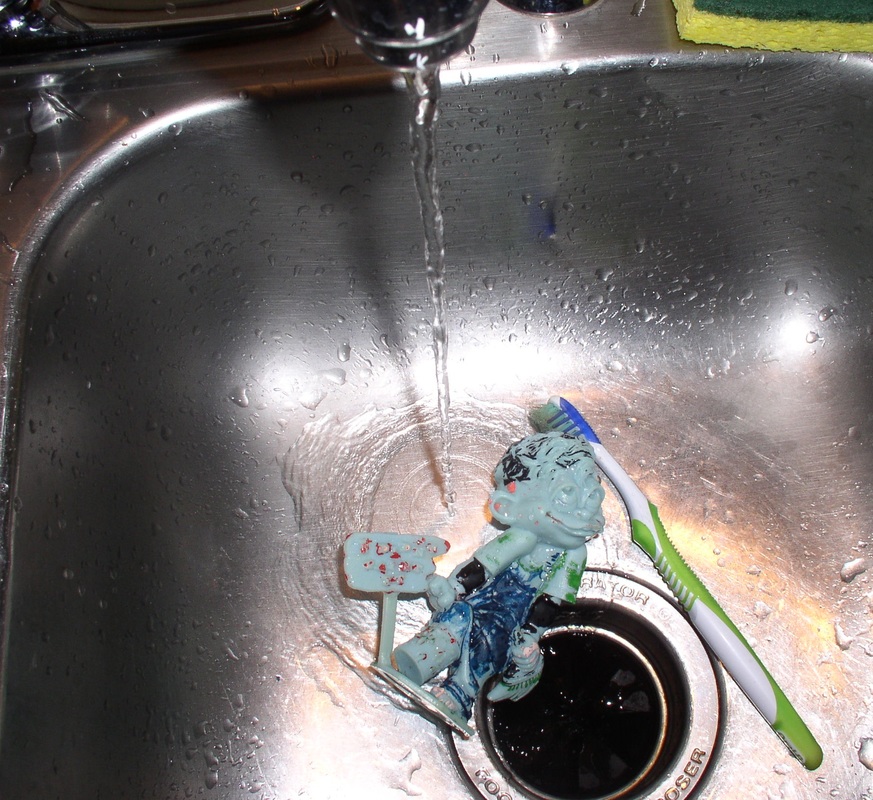
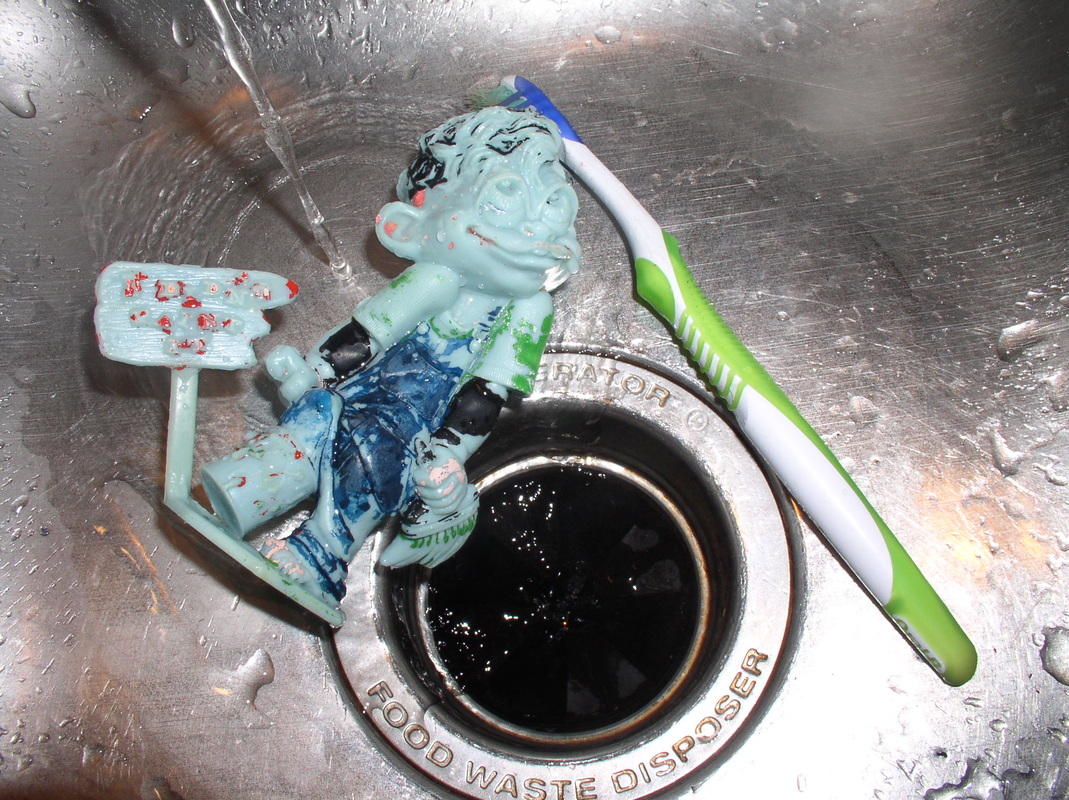
During the final rinse use the toothbrush to scrub the figure well, and you will also use the toothpicks to dislodge any remaining paint leftovers in cracks and crevices. Dry the figure off, and let it set for a couple hours (or longer) for any remaining small crevice areas that still have paint to dry. Once dry, again use toothpicks to pick out the edges (the paint should flake right off after all these processes).  You now have a refinished figure ready for your store or collection!
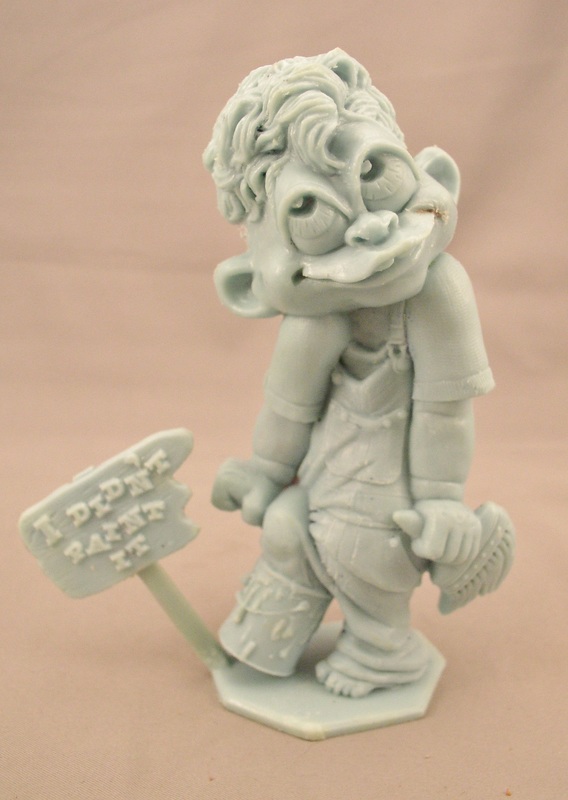
Here's a quick link to a great informational guide on Marx Figurines, along with some price values for each figure. CLICK HERE
This same process works very well with painted model kits!
Comments

Friday Yard Sales....

11/20/2015

Comments

 
I love Yard Sales that begin on a Friday...I've found some of my best buys on this last workday of the week. They are generally much less crowded, and usually part of a three-day weekend long sale so there's usually plenty of stuff to paw through. The downside? Because it's on a work day for most people, many of the earliest attendees are dealers who know what to look for, have a pocketful of cash, and buy in quantity. So....I've found you've got to be there when they open to find the good stuff. Note I said "when they open". I am one of those rare birds today who try and respect the terms of the sale. Many of us, who hold our own sales frequently, are very aware that there are people that will show up a day early, or at 10:00 at night the night before, or even knock on your door... at 6:00 in the morning.  While occasionally they may find someone who will let them peruse the stuff early before anyone else, most won't...and it helps give us "yardees" a bad name. How does anyone expect to bicker on a deal when they've pissed off the seller right off the bat? 

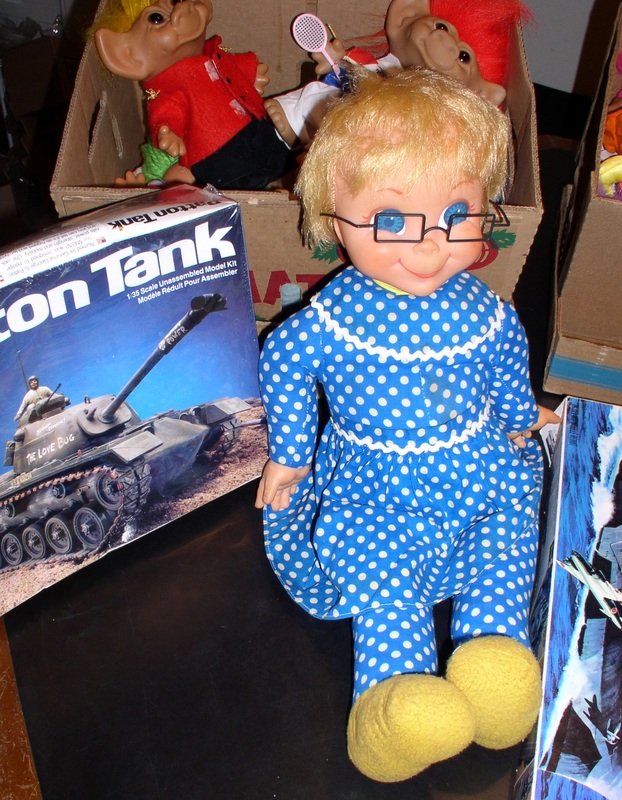
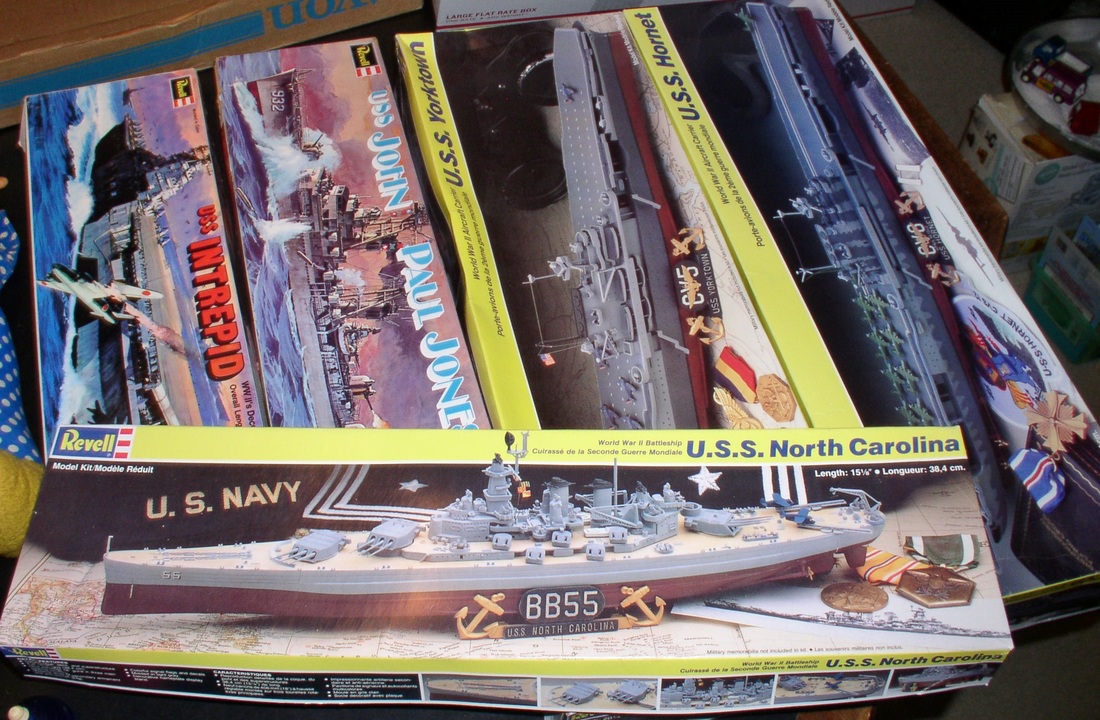
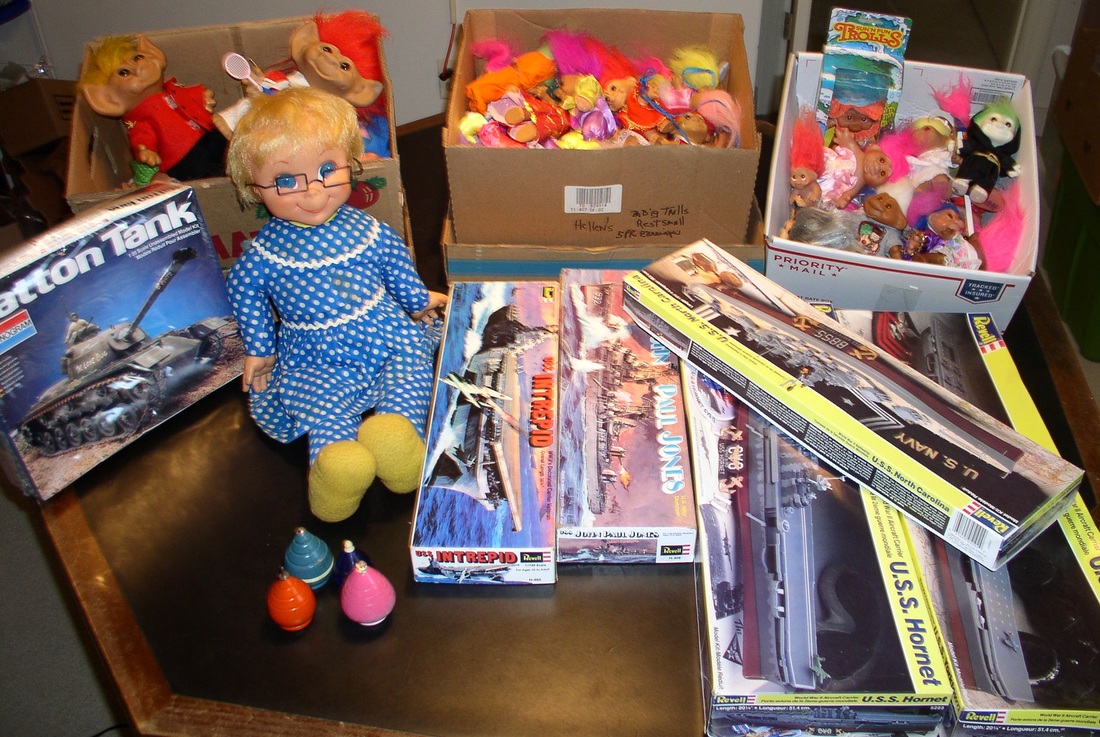
I  drove to a sale this Friday morning and arrived exactly at 8:00.  As normal, there were several dealers there with large piles set aside already, but it was a big sale so there was still plenty to pick through.  Below are the results of this "Hunt", and the total spent for everything shown was $35. The Mrs., Beasley Doll is original 1967, and two of the model ship kits are 1970s Revell "H" kits. The three boxes of Trolls (well over 60 trolls) included many DAM versions from the early 1980s. Finally, a small lot of early Duncan Spinners topped off the lot at $1 each.  All in all, a great morning!

Comments

Don't Overlook These Character Glasses at Yard Sales!

11/5/2015

Comments

 
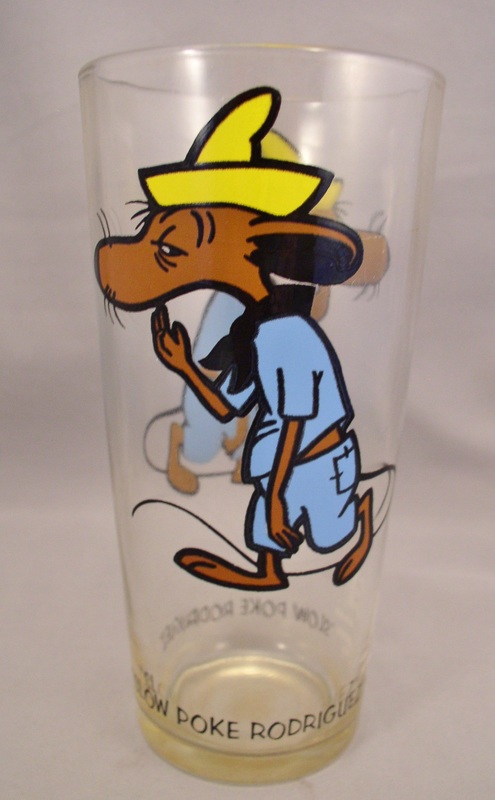
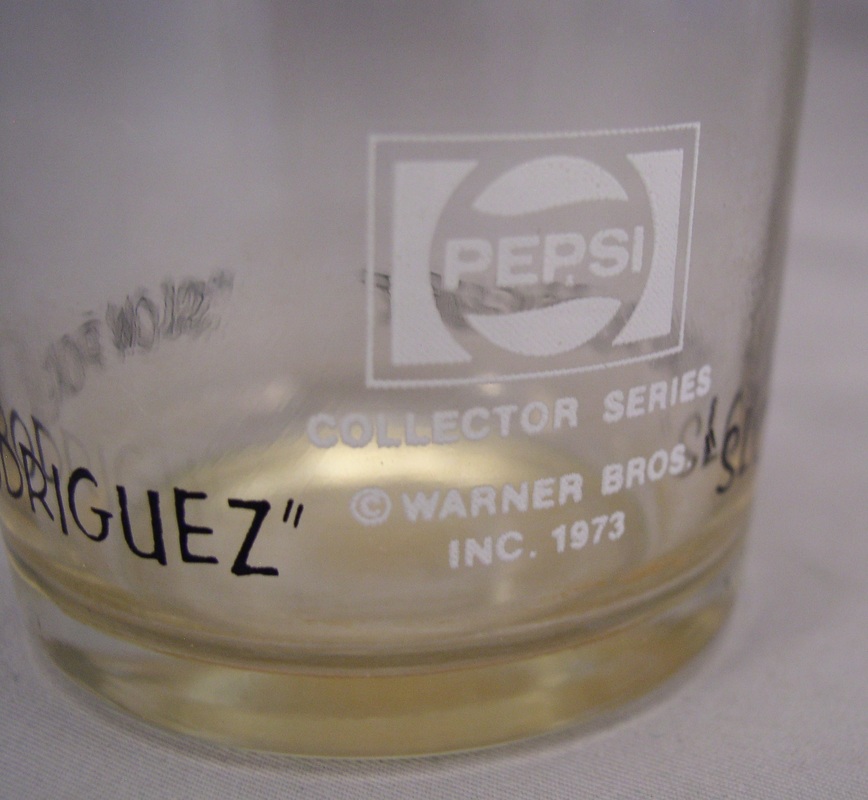
Here's yet another niche to keep an eye out for while out hunting this weekend. You've probably seen these at Yard Sales, Church Rummage Sales, and sometimes in Goodwill Shops, many times offered for $1 or less each. But did you realize that these are a hot collectible right now? The "Slow Poke Rodriguez" glass shown here was produced as part of the Looney Tunes Pepsi Collector Series in 1973, and currently brings between $25 - $40 each on Ebay. Other Pepsi series from the 1973 and 1976 Warner Brothers Looney Tunes series range from $8.00 to $20 depending on the rarity. A complete collection of all 18 of the 1973 Glasses will often sell in excess of $200. The glasses shown here above were bought at a Yard Sale last weekend for 50 cents each.
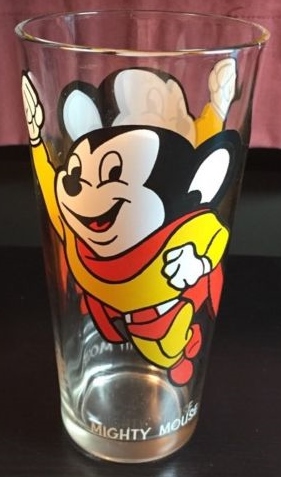
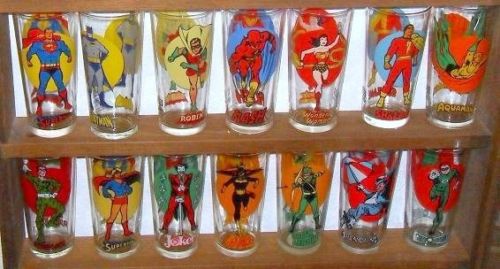
Pepsi also produced a set of 14 "Superhero" glasses in 1976. One set recently sold online for $395.  In 1977 a Terrytoons Themed set was released. The Mighty Mouse glass, if in good shape, will bring between $150 and $250.
Picture
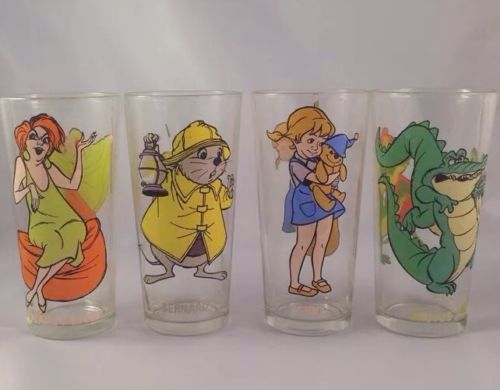
Another set Pepsi produced was a Disney Themed Series in the  1970s. This "The Rescuers" set of 4 Glasses recently brought $40 (with free shipping) on Ebay!

As a side note, there were also dozens of other advertising glasses produced in the 1970s and 1980s that are NOT bringing over a couple bucks each.  And, of course, condition is everything. Even rare glasses are a tough sell if they show excessive wear. When in doubt, smart phones are a valuable tool to search with when in the field!
Comments

"Watch" Out for these High End Timepieces! Upcoming Christies Auctions will offer some stunners....

10/30/2015

Comments

 
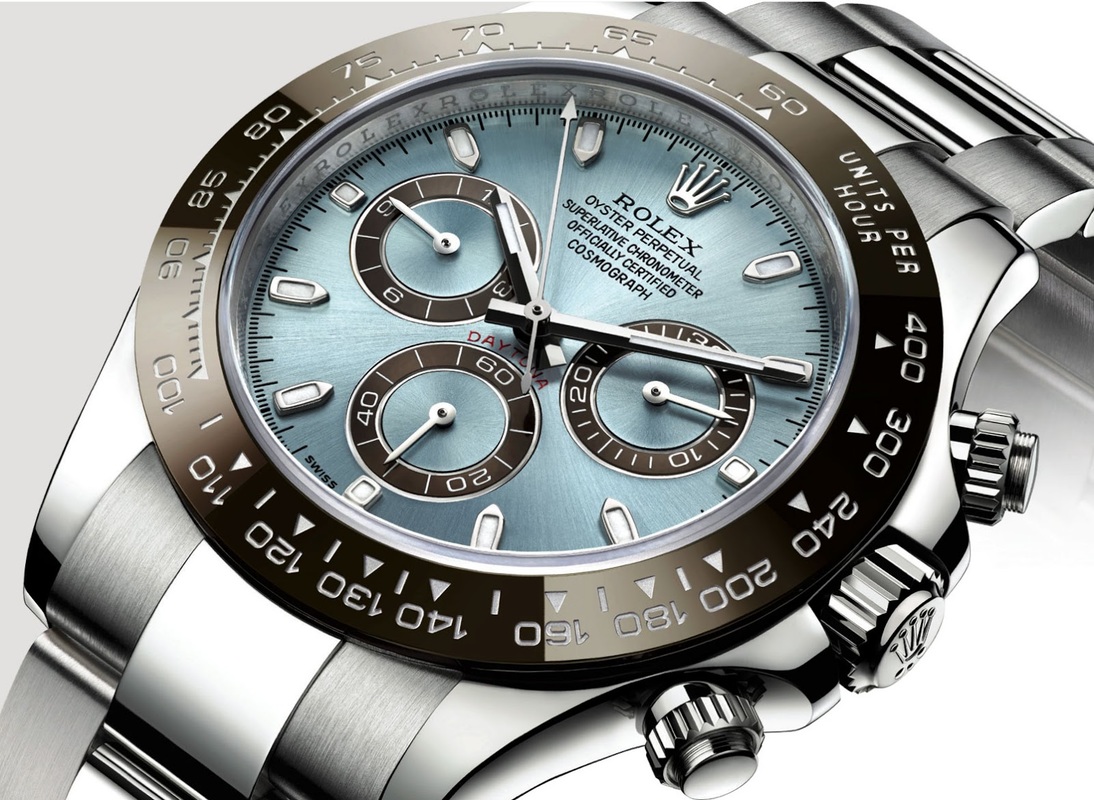
Here's Six "High-End" Timepieces and Watches we all wish we owned! Well, actually you can own one.  They are being offered by Christies and Sotheby's over the next few months. All you need is $100,000 or so to begin the bidding. For the complete story  Click Here

Picture
Comments

When is a Cracker Worth $23,000? 

10/28/2015

Comments

 
Picture
Answer: When it was part of the history of the Titanic disaster. For more on the story CLICK HERE.
Comments

Massachusetts Turns To Ebay To Sell Off The Unusual This Saturday.

10/27/2015

Comments

 
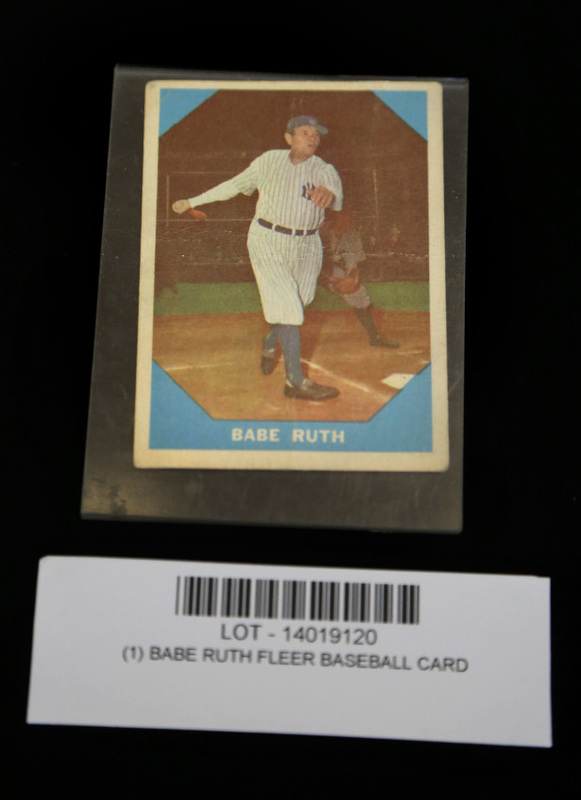
Want a vintage Babe Ruth Baseball card? Or how about a 1949 Boston Fenway Park Felt Pennant? Antique Currency? The State of Massachusetts has just what you are looking for!  Beginning this Saturday (October 31st) at noon, the state will begin auctioning off the first of over 1,200 lots to be sold over the next couple months on Ebay.  Yep, that Ebay.

These are all unclaimed items that have sat dormant for years in safe deposit boxes located throughout the state, and despite intensive efforts to locate the owners, they remain unclaimed. Since 2005, the eBay auctions have raised $2.1 million for the state’s general fund through the sale of 8,377 separate lots. The first 100 lots of this year’s auction go up for bid Saturday at noon, under the eBay user name “mass.state.treasury.”

Picture
For more information on the auction, visit the Massachusetts website or CLICK HERE. 
Comments

When Out Hunting, Don't Overlook Vintage Wilton Cake Pans.

10/26/2015

Comments

 
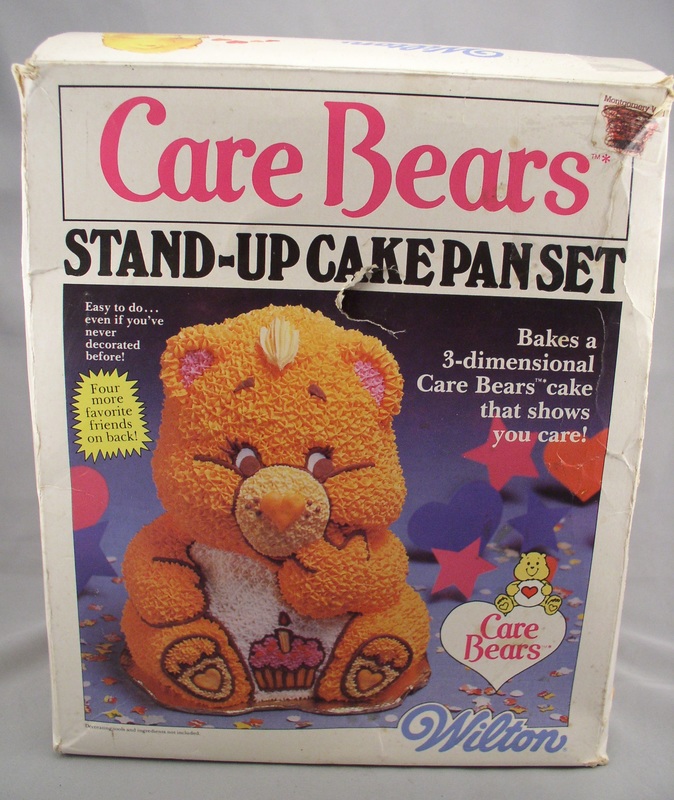
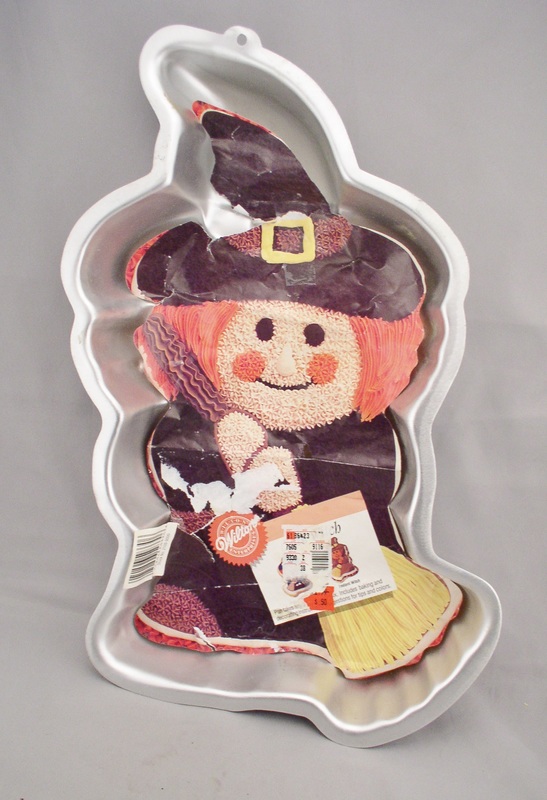
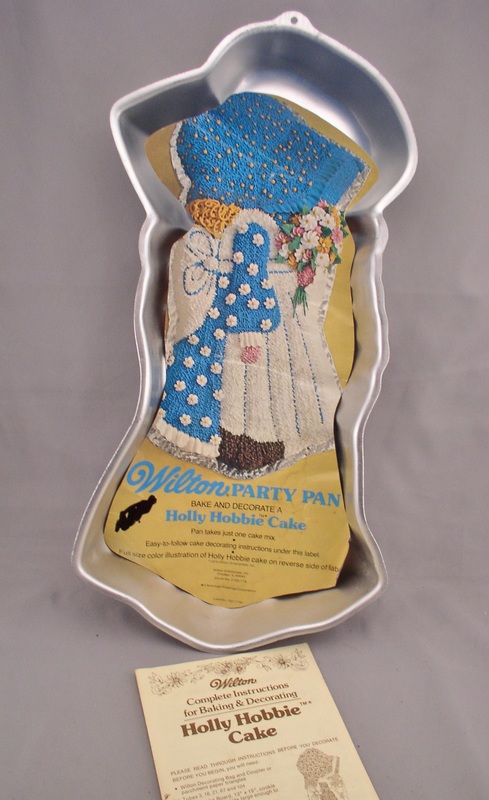
With the Holiday Season fast approaching, people tend to spend more time inside and that means indoors cooking. It's the time of year when kitchen collectibles tend to peak, so don't miss out on these Yard Sale buys that can usually be found for a dollar or two, and regularly sell for $10 to $30 or more. In fact, some pans are selling for substantially higher sums, in many cases exceeding $100. There is a steady and growing market for vintage and retired cakes pans. Wilton is the most commonly known, and as a side benefit each Wilton pan is stamped with the stock number and initial production date right on the surface of the pan, so they are much easier to differentiate between vintage pans and current production pans. Other names to watch for that are highly collectible are Griswold (Cast Iron 2-Piece Pans can bring $125), Martha Stewart Aluminum Pans (2-Part MS Beehive Pan Sets regularly bring $100+), Nordic Ware, Revere Ware, and  Liberty Ware Stainless Pans.

As with almost anything collectible, having the original box or insert (some didn't come in boxes, just the insert inside the pan) and instruction sheet adds to the value. In some cases the pan doesn't even need to be very old.  Here's a few to look for, along with some pricing from recent sales:

Wilton Star Wars Cake Pans (retired issues) $35 - $65
Wilton Minnie Mouse (Full Figure 1998 Issue) $65 - $90
Wilton Mickey Mouse (Full Figure - retired issue) $25 - $35
Wilton Teenage Mutant Ninja Turtles (1991) $35 - $50
Wilton Harley Davidson Motorcycle (1999 - retired) $35 - $55
Wilton Batman Logo Pan (1964 - Retired) $35 - $45
Wilton Pokémon Pikachu Nintendo Figure (retired) $35 - $50
Martha Stewart 3-D Thanksgiving Turkey Pan (retired) $75 - $100
Vintage Nude Female Torso Mold (Unknown Maker) $25 - $35
Nordic Ware Dinosaur Cupcake Pan $25 - $35

What to look for? The "Generic" forms are quite common, with many still being made today, and don't tend to be collectible. Look for the specialized pans that are of superheroes, cartoon characters, movies, and of branded merchandise. These normally required licensing for the pan manufacturers to be able to use, and the licensing periods were generally very limited time wise, so once the rights expired most were never reissued.


Comments

Interesting Concept. Forward Vintage Postcards on to Current Owners of the Buildings? This person does...

10/25/2015

Comments

 
Picture
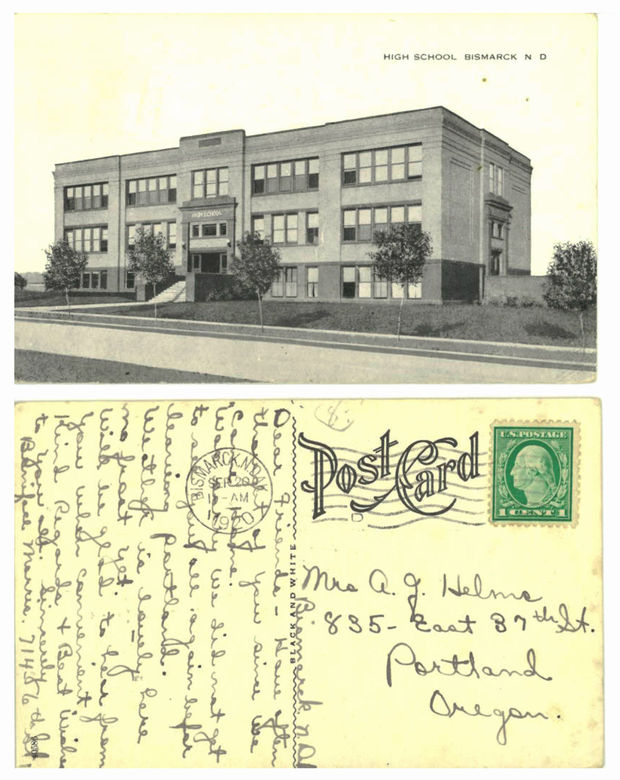
87-year-old Lowell Joerg finds Post Cards in antique shops and Yard Sales, then sends them on to the current owners of the address listed on the vintage cards. This could catch on.....     Click Here.
Comments

The "New" Ebay continues to foster discontent among many long-time sellers.

10/23/2015

Comments

 
Picture
It seems like I have been using Ebay forever, starting with them back in 1998.  Back then Ebay was new, fun, innovative...and very, very profitable. It was "Auctions Only", and nearly everything sold if the starting price was low enough. People paid for items by sending money orders and personal checks through the mail, and few paid by credit cards through PayPal or BidPay.  As sellers, most of us back then chose to use BidPay because the fees were paid by the buyer, not the seller, similar to a "Buyer's Premium" at a Brick & Mortar Auction.  It was fun to find your mailbox stuffed with money orders, checks, and sometimes even cash. Most everyone paid, because those that didn't pay got flamed with "negative feedback" that labeled them as a "deadbeat bidder", allowing others sellers to be forewarned that this buyer had a history of not paying. A seller could then remove their bid and block them from bidding before the end of an auction.

And yes, it was kind of like the "wild, wild west". As there always is, there were a few dishonest or unscrupulous sellers, but they usually didn't last very long, as the feedback system alerted buyers as to what kind of seller was offering the product before they made a purchase.  There was also the occasional dishonest buyer, who likewise found quickly that negative feedback comments severely limited his ability to buy from other sellers on Ebay.  The occasional "real" mistakes and misunderstandings, when they happened, were usually worked out in a cordial manner. The selling fees were very affordable, usually amounting to between 3% and 5% when all the factors were added in. Basically, sellers were happy, buyers were happy, and Ebay made a ton of money.

Sometime between 2005 and 2007 things began to change. Not all at once, but by little bits at a time that kept adding up,  and adding up until all of a sudden Ebay wasn't the same fun, profitable place for most any more.  And then it got even scarier.

Today, a trip to the Ebay Community Seller Forums is an eye-opener. A majority of the discussions revolve around how deadbeat buyers are now common, scamming by buyers has transitioned into an art, there is almost no customer support for sellers, and an automated "Customer Service" system that usually sides with buyers and will almost automatically process refunds to buyers for the flimsiest of reasons....if any reason is given at all. Sellers are hit with being charged shipping both ways on many returns, after initially being charged a 10% fee on the shipping to begin with (a fee...by the way, that is not refunded when the item is returned). On top of that, buyers have 180 days to return many items for that refund, hence the graphic at the top of the page, which was "borrowed" from a posting at the sellers forum. Having a Prom? Buy a dress of your liking off Ebay, wear it to the prom, then a couple weeks, or even months later return it for whatever reason. At most the buyer might have to pay the shipping back to the seller. Want to read a new book? Buy it on Ebay, read it, return it. Halloween Costume? Why not. The opportunities go on and on.  Scammers have taken notice.

Mention Ebay to vendors at a Flea Market or Antique Mall today (the very people that initially made Ebay into the giant it is today) and one will quickly see just how deeply this distrust of the company actually has gone. Very few will have anything good to say about the company. Most are using alternative venues even if they are still using Ebay.  Many have simply gone in a different direction completely, and not looked back. And most will tell you, when they sell elsewhere, they also buy elsewhere. "Ill Will" is not a word most businesses like to hear because it is very, very hard to overcome once the label has been attached.
So how did Ebay fall so far, so quickly, in the eyes of many?  In less than ten years it has gone from top of the heap to just another venue for selling stuff. What changed?

In my opinion many factors contributed to where they are today, but like boiling that frog in a pot, the heat rose gradually in steps and was unnoticed early on. Today it is boiling.

Factor number one: Greed. What were initially perceived as very fair (and profitable) fees were slowing tweeked, re-tweeked, then new fees added on, all in the name of "improvements".  Yes, Ebay had an obligation to maximize profits for the shareholders, but it also had an obligation to balance those profits in a way that still retained their customer base (the sellers). Some of these fees were shameless in the explanations Ebay provided as the reasoning behind them. An example is the 10% fee on shipping charges, which sellers have no control over, because a very few were scamming Ebay by offering an item at very low cost such as a $50 item for $2- which normally the Ebay fees would apply to - then making it up by overcharging shipping costs - which did not have any fees attached to.  Instead of ridding themselves of these very few unscrupulous sellers, Ebay saw an opportunity and simply attached the same fees to the shipping charges across the board.  The end result is a $10 item sold with $10 in USPS shipping charges just doubled the amount paid to Ebay, going from roughly $1 to $2 in "final value" fees. Multiply that by millions of sales a week and you're talking real money.
Factor number two: Control.  Ebay was founded and grew as a venue that connected buyers and sellers, and received a fee for that service. Sellers offered items for sale, buyers purchased it from that seller, both left feedback about how the transaction went, and Ebay received a small fee for putting the two together.

Again, one step at a time, Ebay has evolved into a company today that completely controls what is sold through them, controls the returns process, controls how communications between parties are handled, controls the payment process, controls the refund process (without seller input in many cases), controls the amount of shipping that can be charged in many instances (forcing some items to be shipped at a loss by sellers), and even controls when the money can be paid to the seller for his own merchandise.

Another way to look at Ebay today?  They are using the inventory of millions of sellers (without any investment in that inventory) to build their market;  using the labor of millions of vendors to photograph, describe, and post that inventory on their website; collecting the payments with a guaranteed profit margin percentage as a fee for every sale, and using their own discretion - not the owner of the merchandise - how and when to offer returns, all while using their own discretion of when to offer refunds and automatically charge it back to the seller. Is that a service? Or is it a company using another's inventory, another's labor and another's capital to turn a profit?
Picture
Factor number three: Competition.  Ebay was the first of its kind back in the 1990s. The internet was new, and the concept of online auctions took off like wildfire. Ebay exploded, and it took several years for others to try and build some competition. But Ebay owned the market...that was where everybody went to look, so it was only natural to become the place to sell the stuff out of the attic.  It was also affordable, and quite easy to use.

Slowly several competitors appeared with similar pricing, some even cheaper. But Ebay owned the market of online auctions from private parties.

Amazon back then began as an online book store. Within several years they expanded into CDs, DVDs, Computer Products and other related items. Initially what gave Amazon a web advantage was the venue: they could offer 2 to 3 times the offerings of a normal "brick & mortar" book store, while at the same time saving the customer a drive to that store.  They owned, or controlled,  what they sold...offering a combination of variety, price and convenience. The concept, like EBay's, exploded.

Amazon expanded the concept into other merchandise. They bought other online providers such as Drugstore.com, Pets.com, Gear.com, Homegrocer.com and dozens of other companies. They also built or bought fulfillment centers to control the supply line and shipping efficiencies. Amazon used their own inventory, their own labor within the supply chain, and their own capital to continue to grow. By 2001 they had revenues of over one billion dollars.

They later expanded into allowing others to use their format to sell product through, for a fee. In most instances this was brand-new merchandise offered by dealers or manufacturers.  Ebay took notice.
By the late 1990s many venues were emerging for niche markets that focused on a specific market such as crafts, hand-made items, antiques, and specialty sales such as vintage clothes. While they didn't have the size of Ebay, many carved their name out as a specialty area where more items  in that niche could be found. Many of these pre-screen and carefully controlled their vendors, eliminating much of the difficulties with problem sellers.  Ruby Lane focused on Antiques, Etsy built its name on crafts and hand-made items, Bonanza started to grow as an Ebay alternative but with free listings, Ebid, eCrater, Pinterest and opthers all jumped on the bandwagon. And most were significantly cheaper than Ebay. Free formats, such as Craigslist and Facebook, grew on the local level.

As Ebay became more expensive, added more and more rules & regulations, and began being perceived as hostile to sellers, many of EBay's seller base began to move part of their business elsewhere. As sellers moved, so did many buyers. Sellers could sell items for less money and still make the same profit, based on the reduction in the amount of fees being charged. Buyers liked this. Ebay seemed to have a deaf ear to what was happening around it. They were, after all, the biggest....a fact often brought up by their Customer Service Reps when one spoke with them about a problem. Size matters, they said, so its "our way or the highway".

Today, Ebay ranks 5th in Seller Satisfaction according to the 2015 EcommerceBytes Sellers Choice Marketplace Survey, ranking behind Etsy, Amazon, Bonanza, and Ruby Lane.

The competition is here to stay. and customer satisfaction also matters, and Ebay seems to not realize that the revenues they receive are from sellers, not buyers.  It will be interesting to see what direction the new leadership at Ebay will try to take. It may be too late.
Comments

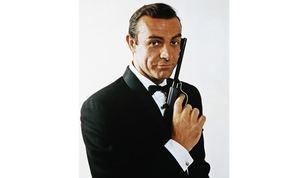
"Bond...James Bond."  The Votes Are In.  Who Was Your Favorite?

10/20/2015

Comments

 
Picture
I found this article interesting, especially growing up in the 1950s and 1960s with Agent 007 as one of my favorites. I actually read most of the paperback novels by Ian Fleming before most of the movies came out.  Goldeneye was the first, and it got me hooked.

I had this "thing" growing up...when I found an author I enjoyed, I read everything he had written that I could get my hands on before moving on to a different interest. Growing up in Maine, my income as a child mandated that most of what I read came from the Baxter Library in Gorham, Maine, as I didn't have the funds to buy the books, and unfortunately the library had very few Bond novels. Luckily, a friend's Dad was a big Fleming enthusiast, and had most of the paperbacks, and usually had bought them as they were released. The problem was that the Bond in Fleming's novels wasn't exactly a "model citizen", and many parents considered them too "adult" to be read by children. The Bond depicted in the novels was a heavy smoker, a heavy drinker, and a womanizer. Just about everything a young kid wanted to learn about.

So, I discreetly "borrowed" them from his bookshelf, one at a time. They were quick reads, so a few days later I would return it and borrow another. By the time most of the later movies came out, I had been through everything Fleming had written.  I always thought that Sean Connery was the perfect Bond, and even today remains my favorite. According to this latest poll, I am not alone.

This link will take you to a recent study to determine which of the actors to play Bond are the most collectible:  CLICK HERE

Which is your favorite?
Comments
<<Previous
Forward>>
    Picture

    The Hunter's Blog
    Stu Neal

    Antique & Vintage Toys
    Collector
    Appraiser
    Author

    Archives

    October 2019
    September 2019
    August 2016
    June 2016
    February 2016
    January 2016
    December 2015
    November 2015
    October 2015
    September 2015
    February 2015

    Categories

    All

    RSS Feed

Copyright (C) TheFunOfTheHunt.com 2015    All Rights Reserved Worldwide