The Fun Of The Hunt!
  • The Fun Of The Hunt!
  • About Us
  • Research & Value Guides
    • Antiques
    • Books
    • Coins & Stamps
    • Dolls & Figures
    • Games
    • Marbles
    • Music Related
    • Toys
  • TFOTH Hunter's Blog
  • Interesting Links
  • Buy Stuff
  • Contact Us

Don't Throw Out ThoseĀ  Old Coffee Mugs......

2/11/2016

Comments

 
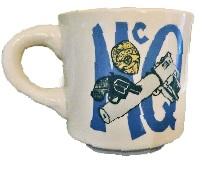
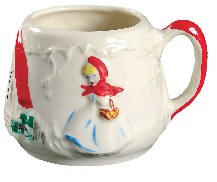
Who knew?  Coffee Mugs bringing well over $100?  Yep. All the mugs above - a John Wayne "McQ" Movie Mug, a Little Red Riding Hood Pottery  Mug from the 1940s and an early Starbucks mug - did just that. In fact the Little Red Riding Hood mug brought over $400. So how do you tell what's worth money and what's not? You can start here by reviewing this excellent article at BottomLinePersonal.com.  CLICK HERE

That twenty-five cent Coffee Cup purchase at your next Yard Sale might hold a lot more than just Java! Good Hunting!
Comments

Updated "Coins & Stamps" Research Pages - Coin Grading Resources

2/4/2016

Comments

 
Picture
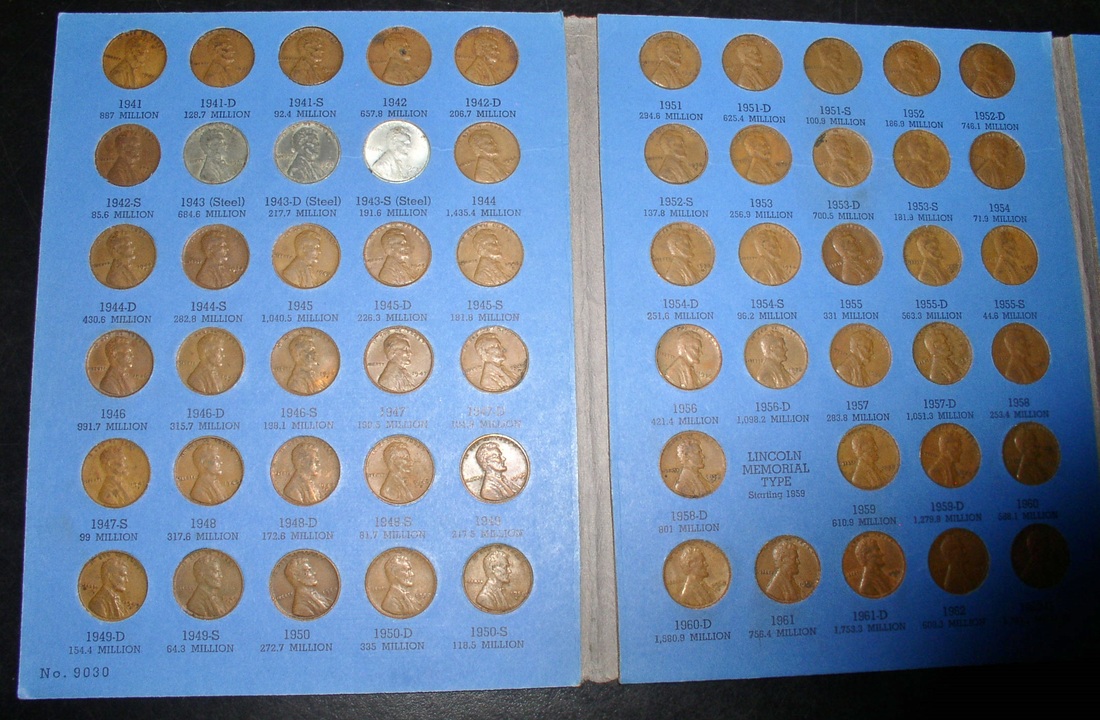
We have recently added several new resource links to our Coins & Stamps Research Page, including direct links to two of the most trusted grading services.

A while ago we received a very nice email from Ryan inviting us to check out their website at www.usacoinbook.com. We receive solicitations like this nearly every day, and so unfortunately this drifted down the email string, and was lost until last week. I was in the process of trying to identify an unusual U.S.  Coin (or token) I have had for some time  that has proved to be quite a challenge, and stumbled across the email again and decided to check out the website. I was pleasantly surprised! It is a fantastic destination for anyone seeking information on United States coinage, or even those beginners that are new to numismatics. In addition, they have set up their own coin "buy - sell" resources, and even have included an on-line database that will allow individuals to keep track of their own collections. As an example, below is a sample of their "How To Grade Coins and Conditions" taken from their Encyclopedia Page at their website.  For a link to that entire page (which includes much, much more)  CLICK HERE.

"How to Grade Coins and Conditions*

Pretty much anyone can grade circulated coins once they are exposed to coins and get a good reference to which grade corresponds with what. Unless you are an expert or know enough about coins, you should only worry about trying to grade circulated coins. Most uncirculated coins, especially old ones should be submitted to professional coin grading agencies such as PCGS or NGC for precise grading. It may cost some additional money but it is usually worth it for older coins or coins that you suspect of being near perfect conditions since the highest grade coins can easily be worth thousands of dollars, even modern perfect coins.

For the average or novice collector, the first step is to start working on some regular circulated coins containing old ones and common pocket change. It is also advised to have uncirculated mint state coins at hand to use as a reference and compare your coins with. Many of these kinds of coins are easy to obtain anyways. The first thing you need to start grading coins is a good bright light source. If you are serious and really want to get good at it, you should pick up a magnifier with up to 8x zoom. You do not need anything more powerful than 8x since this is the standard limit that the professionals would use. The magnifier is also best used for fine details or determining a specific coin grade, especially with uncirculated coins mostly, but it is a good tool to have on hand.

If you have a big pile of coins, the best thing to do is look at each coin with the naked eye and separate according to how well they look. Many people put the worst coins on the left and the best looking coins on the right, up next to the uncirculated reference coin (that you probably should have in a plastic holder of sorts!). If you have a coin that looks much like the uncirculated coin, then this must be in "About Uncirculated" condition since it is nearly uncirculated but you know it is circulated since you are touching it. View the references below to choose if your "AU" coin is a low grade one with lots of contact marks or if it is highly visually appealing.

Look at all the coins next to each other from poorest condition to best condition. You can start to get an idea of how you can classify each coin, especially if you have a large number of coins in a wide variety of conditions. Many modern coins will never have conditions below Very Fine in some cases so you might need some older coins like Buffalo Nickels, Indian Head Pennies and Mercury Dimes to work with. These are usually great coins for learning coin grading techniques since their conditions vary widely from heavily worn to very nice looking. Once you get good at grading coins, you can start to safely put them in cardboard coin flips like the one shown on the left or the really nice ones in the Air-Tite plastic holders, and then mark their grade on them. This is how many coin dealers do it and how you can milk a little extra profit or get the best deals just by having good coin grading knowledge.
  • Poor or Basal (P - 1) - This is the worst condition of coin. The coin must be identifiable, have a mintmark and a date, otherwise the coin is pretty much worthless. Usually the coin is just barely identifiable or has a lot of damage which make them poor or basal.
  • Fair (FR - 2) - Fair coins are usually very smooth like poor coins but do not contain heavy damage.
  • About Good (AG - 3) - About good is slightly better than fair coins and the date is hard to read but even the major details are worn down or nearly removed from the coin due to wear.
  • Good (G - 4) - Good coins have heavy wear but you can still see the date. Usually the date is worn down or merges with the rim of the coin. The major details are also smoothed out or mostly gone.
  • Very Good (VG - 8) - Coins in very good condition have heavy wear on them but the major details are more visible. The central details are still worn down and barely existing.
  • Fine (F - 12) - Fine coins still contain a lot of wear but the overall design is bold and clear. Also, the rims of the coins are nearly separated as well.
  • Very Fine (VF - 20) - A Very Fine coin grade indicates that the rims are clear and much of the wording is clear. There is moderate wear to the coin and the finer details are beginning to appear.
  • Extremely (Extra) Fine (EF - 40) - A grade of Extra Fine or Extremely Fine is given to a coin with very little wear and much of the major and minor details are clear and bold.
  • About Uncirculated (AU - 50) - A coin that is about or nearly uncirculated has very little wear but may have contact marks or scratches from other coins that came in contact or from the machines. AU-50 is not a very appealing coin but it is still nearly uncirculated.
  • Very Choice About Uncirculated (AU - 58) - A Choice About Uncirculated coin is much like the AU-50 variety but has almost no contact marks, there almost full luster and the coin is visually appealing.
  • Uncirculated - Mint State Basal (MS - 60) - These coins are uncirculated but usually have a lot of ugly contact marks and scratches usually resulting from wear and tear of flowing through the machines at the mint. There is almost no luster and the coin is not visually appealing, but it is still uncirculated.
  • Choice Brilliant Gem Uncirculated (MS - 65) - A choice brilliant uncirculated is a coin with nearly full luster, almost no contact marks and is highly appealing with a great strike at the mint.
  • Premium Quality Mint State Uncirculated (MS - 68) - These are highly attractive coins with a sharp strike. Premium Quality coins have a perfect luster and there are no visual contact marks to the naked eye.
  • All But Perfect Mint State Uncirculated (MS - 69) - An all-but-perfect coin is highly appealing visual and has a perfect luster and perfect strike. The only thing that makes this coin not perfect is that there are microscopic flaws in the magnitude 8x range that include either contact marks or flaws in the planchet that the coin was struck on.
  • Perfect (MS - 70) - A Perfect coin of the mint state uncirculated type is totally flawless even on the microscopic scale up to a magnification of 8x. The coin is also perfectly centered with full, highly appealing original luster. A perfect coin is also struck sharply on a flawless planchet. These are some of the most valuable and sought-after coins for collectors and numismatists.
  • Proof (PR - 65) - The PR scale is used for proof coins and runs from 1 to 70 just like the normal MS scale. A Proof 65 coins is just like a Choice Brilliant Gem Uncirculated MS-65 coin except the coin is a proof. Proof coins are those with mirror-like surfaces which are specially struck longer and with greater pressure with thicker planchets. Typically, these special coins are meant only for collectors and are found in cases or sets."
*Credit: Copyright USA Coin Book
Comments

Customers Like This Are What Makes It Fun - Pedal Cars

2/3/2016

Comments

 
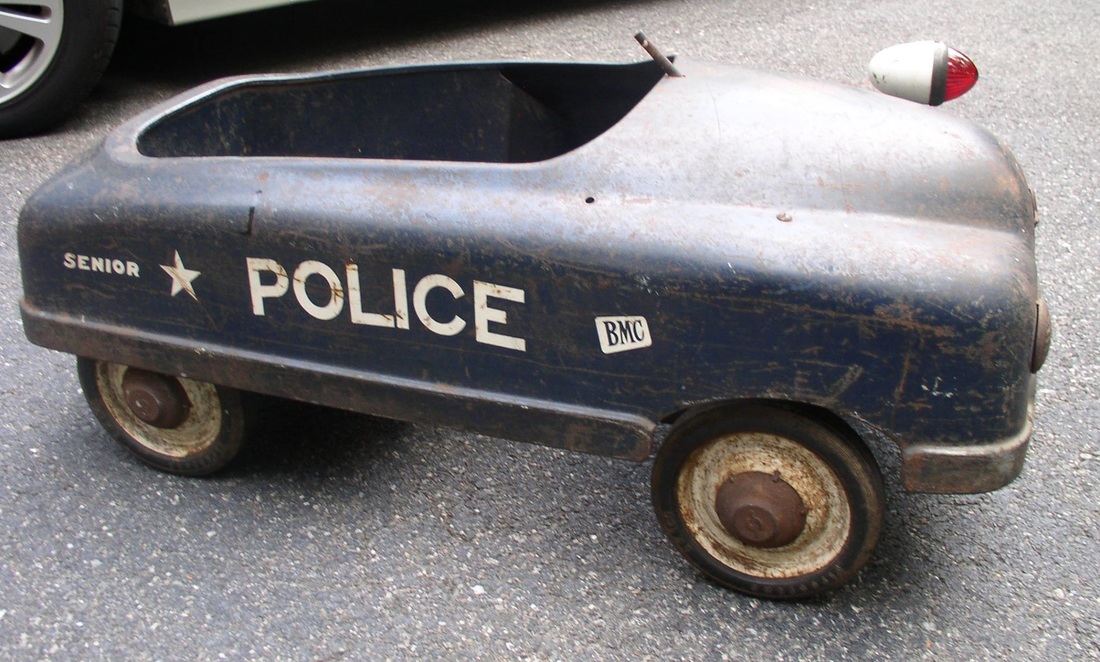
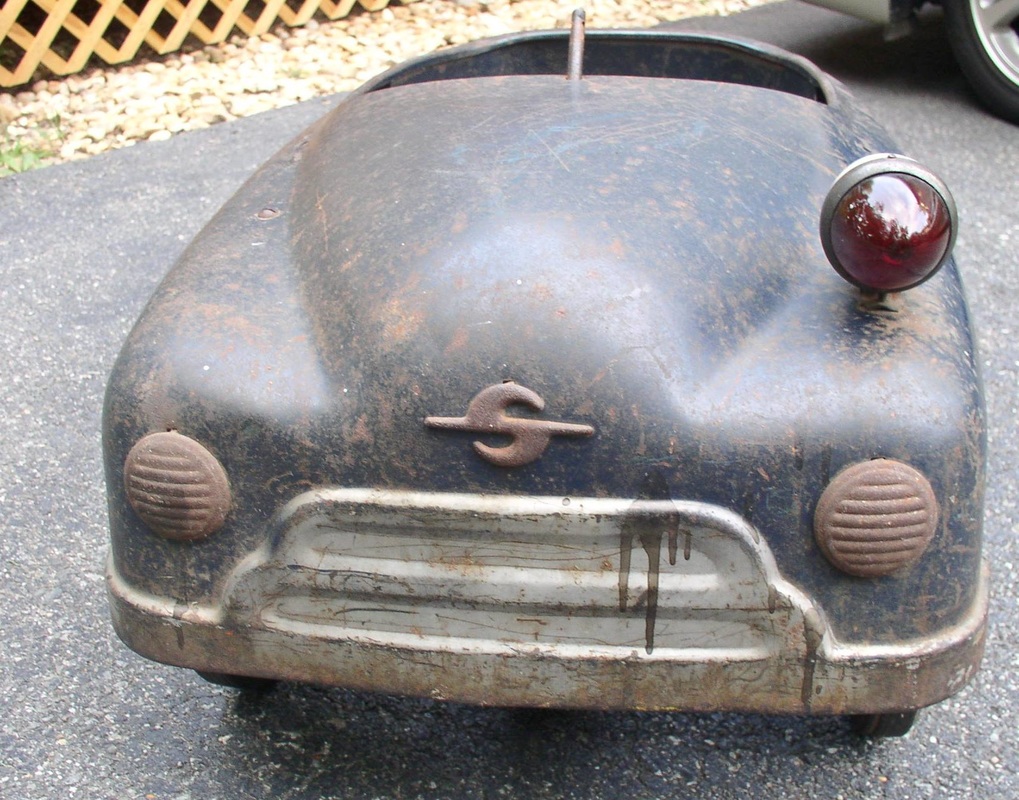
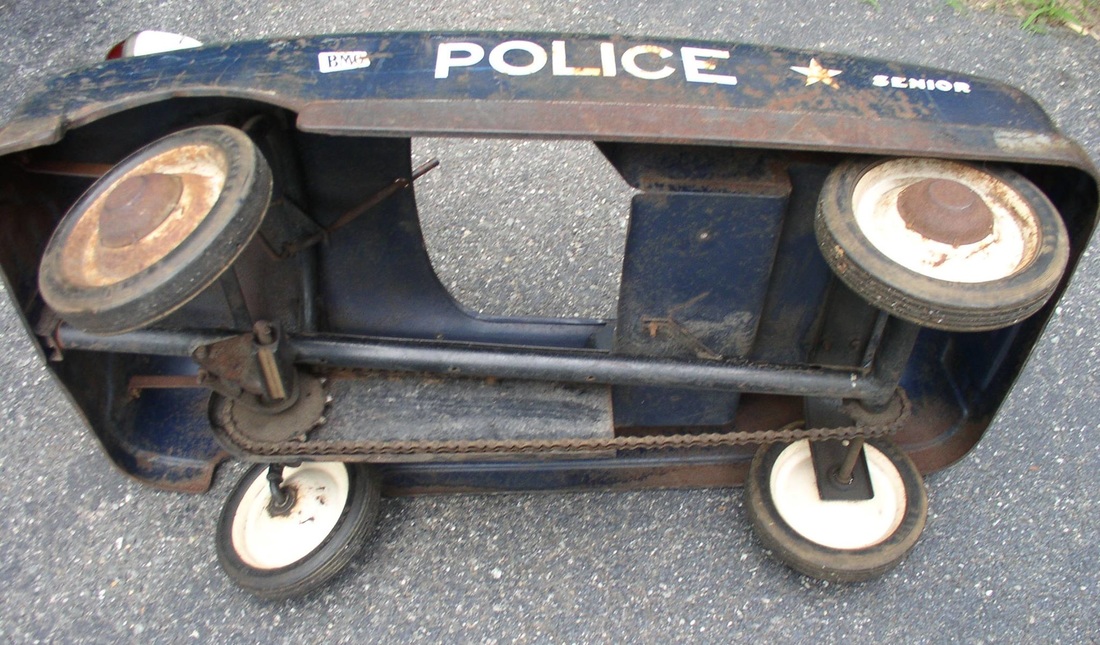
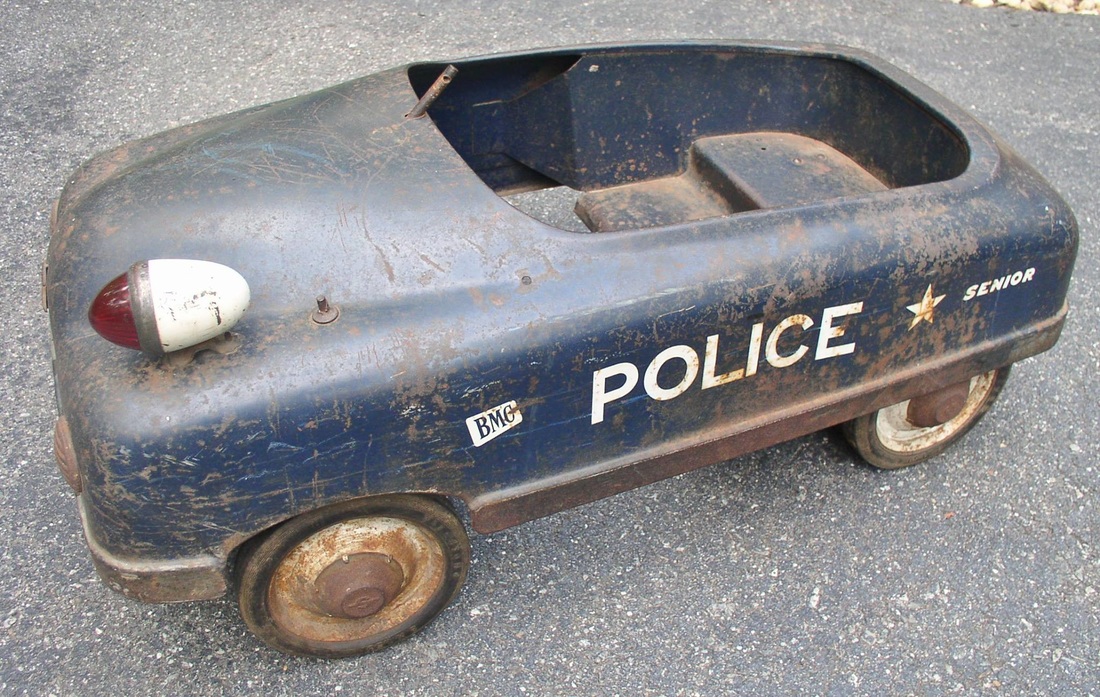
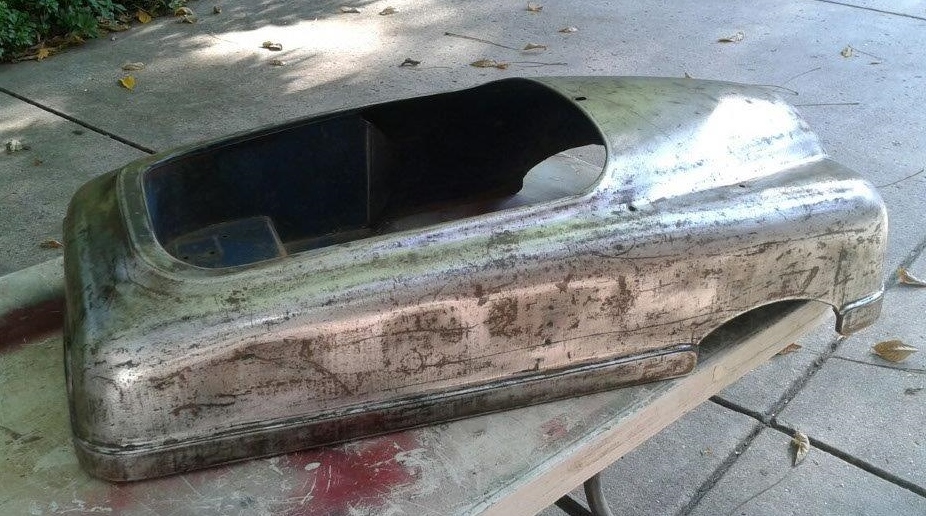
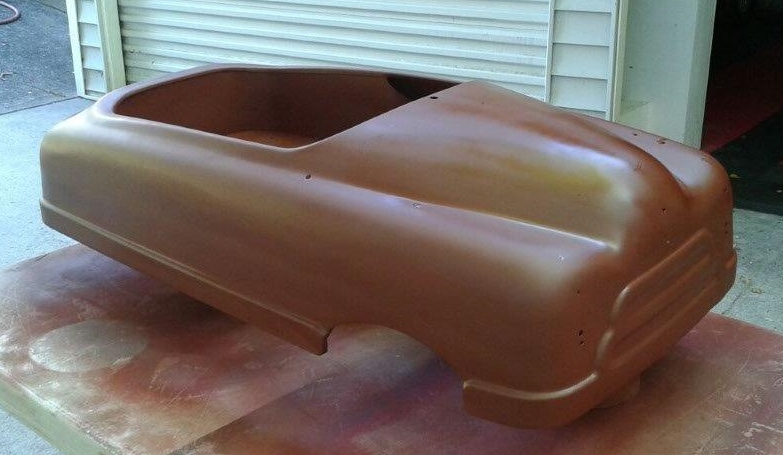
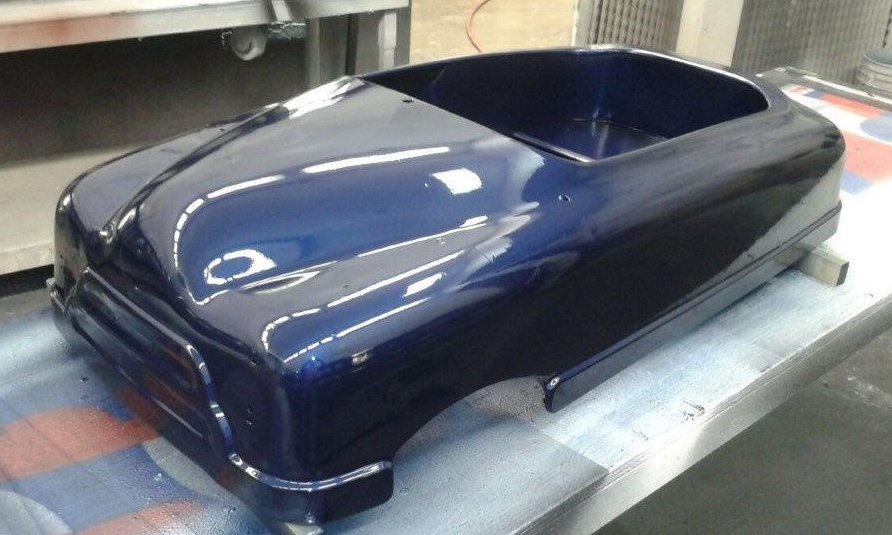
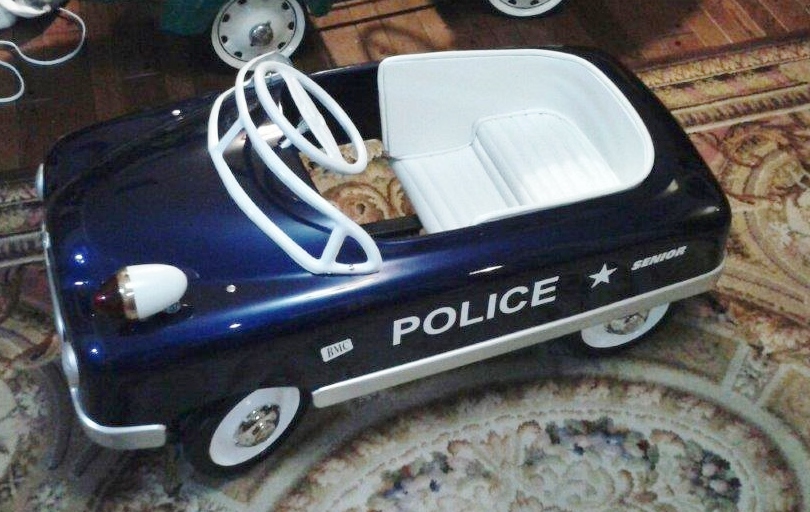
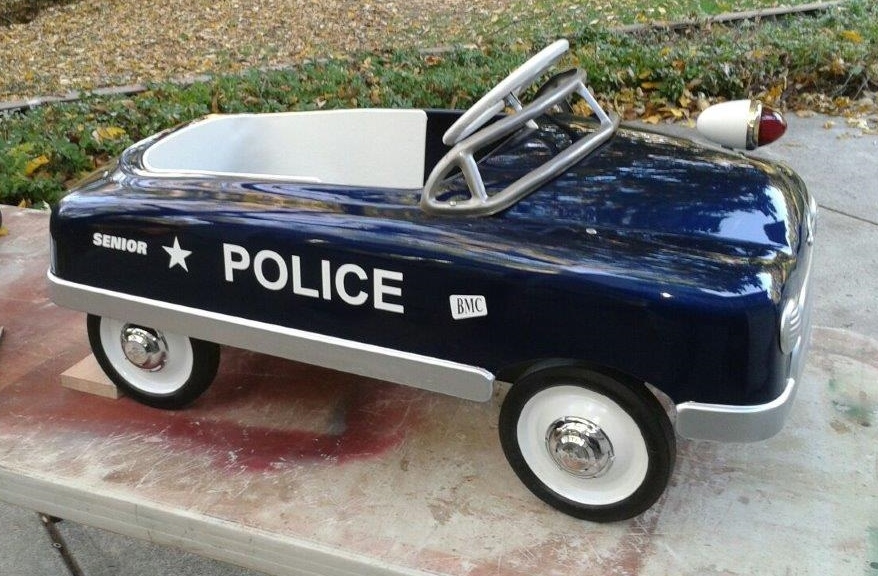
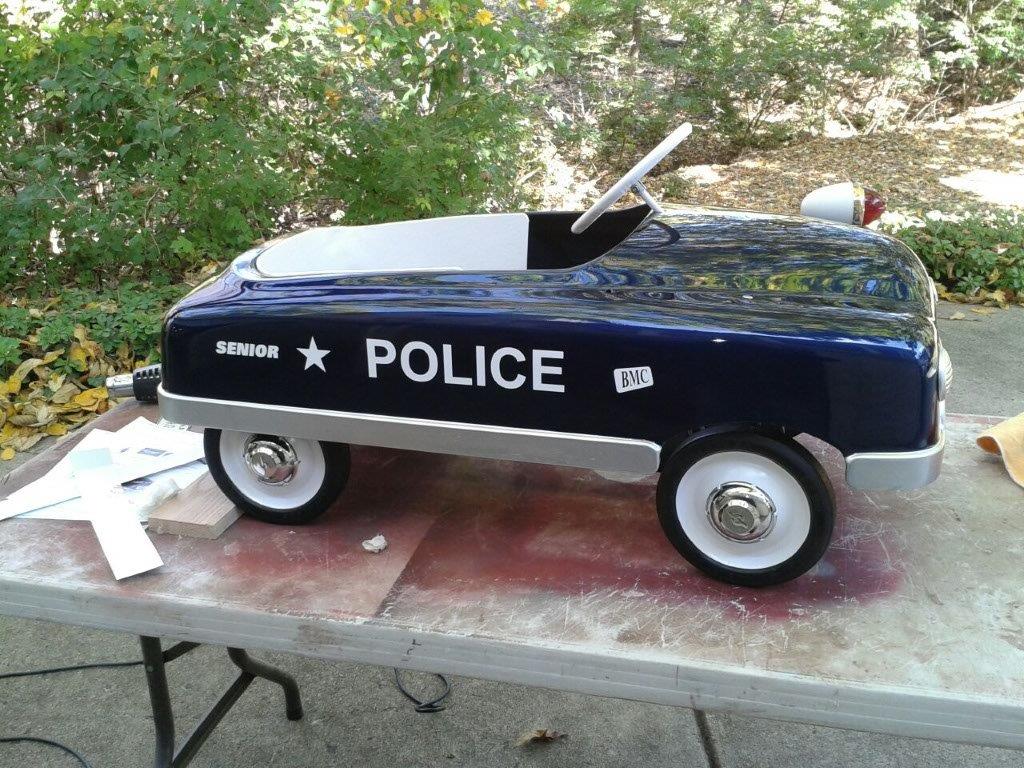
Last year we wrote about finding this rarer 1952 BMC "Senior Police" Pedal Car at a local Yard Sale. It was a good, solid original car - complete with original paint - but missing the steering wheel, windshield, and seat cushion. It sold online to a customer here in Virginia who picked it up, giving us a chance to chat about the car and other pedal cars he had restored. I really thought this car had a lot of potential if properly restored, and asked him to shoot me a few pictures if he did restore it. Last week the pictures arrived.  Wow.

Below are what it looked like last year when we sold it.
As these pictures show, the car was completely stripped, the body properly filled, sanded, primed and painted. He wrote that finding original parts was a bit of a challenge, especially the windshield.  But I'll let him tell the story:

"Good morning Stu . I always take lots of photos of my restorations. Here's a few more of the police car if they help . I think part of your story can be as with probably any toys,  folks want to find the unusual or the ones no one else has. This was the case with this BMC. I knew it was unusual . I had only ever seen one other. The down side with that is finding parts for that rare pedal car or toy . If you want to try and truly restore your  item to its original condition, it becomes more of a challenge. I could have put any number of aftermarket parts on , but didn't really want to do that. Long story short was trying to find the windshield. I couldn't even find an aftermarket place who sold this particular one.

As I started calling around the country I found that there are a few old guys who have purchased the original presses who could press me a new windshield from an original mold. These older fellows don't have a "stock ", but if you can talk them into it, will go into their shop and make you one. You also find some of the men are so old and frail, that they don't really make parts any longer but still have the equipment . Anyway , I got one pressed. I had to cut it out myself and trim it up. I was just very thankful I was able to find this gentlemen,  and develop enough of a relationship that he would go to the trouble to press this for me. It sounds like this fellow is making parts for many of the aftermarket vendors. When he does that he makes 100's at a time for their stock .

Thanks for showing interest. I currently have four projects I'm working on and would be happy to keep you up to date on those if you want. Trying to get the wife interested in selling a few. We are planning to go to an antique toy sort of show in Pigeon Forge in May, just to see what others are doing."

Here is the finished Pedal Car, properly restored. Great Job! There is a lot of satisfaction seeing those old toys returned to their original condition.
If you have an interest in seeing this project, along with his other cars, here's the link to the event in May: The Smokey Mountain Antique Toy and Pedal Car Show
Comments
    Picture

    The Hunter's Blog
    Stu Neal

    Antique & Vintage Toys
    Collector
    Appraiser
    Author

    Archives

    October 2019
    September 2019
    August 2016
    June 2016
    February 2016
    January 2016
    December 2015
    November 2015
    October 2015
    September 2015
    February 2015

    Categories

    All

    RSS Feed

Copyright (C) TheFunOfTheHunt.com 2015    All Rights Reserved Worldwide